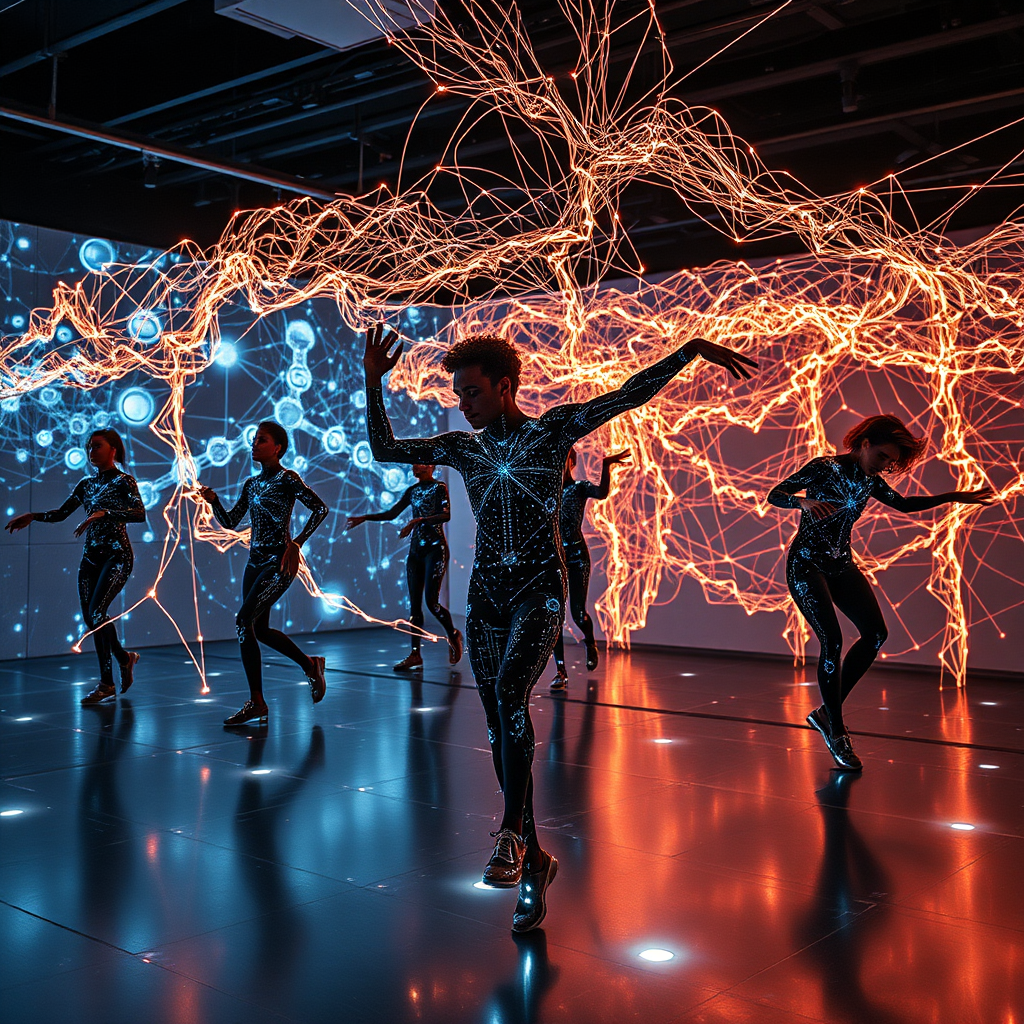
The intersection of artificial intelligence and human movement has birthed a revolutionary paradigm in choreographic expression. As we witness the silent creation of motion through neural choreography, traditional boundaries between human intuition and machine precision dissolve into something entirely unprecedented.
From Sensors to Synapses: The Neural Revolution
The evolution from mechanical motion capture systems to AI-driven choreography represents more than technological advancement—it embodies a fundamental shift in how we perceive and create movement. Traditional motion capture relied on physical markers and sensors, constraining dancers within predetermined parameters. Today's neural choreography systems, powered by advanced machine learning algorithms, can interpret intent-driven visuals and translate subtle human gestures into complex movement sequences.
Modern AI systems like RunwayML have pioneered approaches that go beyond mere recording. These platforms utilize deep learning networks that understand the grammar of movement, predicting natural progressions and generating fluid transitions that feel authentically human while pushing creative boundaries beyond what any single choreographer could imagine.
The Architecture of Silent Creation
What distinguishes contemporary AI choreography is its ability to work with minimal input data. Where traditional systems required extensive marker placement and calibration, neural networks can now interpret movement from single camera feeds, analyzing posture, rhythm, and emotional expression to generate comprehensive choreographic sequences. This silent creation process allows for unprecedented creative freedom.
The cinematic abstraction achieved through these systems transforms raw movement data into artistic expression. AI algorithms don't simply replicate human motion—they interpret it, enhance it, and reimagine it through computational creativity. The result is choreography that maintains human authenticity while exploring movement possibilities that exist beyond physical limitations.
Runway AI: Pioneering the Future of Movement
Platforms like Runway AI have revolutionized how we approach motion generation and analysis. Their neural networks can process complex movement patterns and generate new choreographic sequences that maintain stylistic consistency while introducing novel elements. This technology enables choreographers to explore movement vocabularies that would be impossible to conceive through traditional methods.
The integration of intent-driven visuals means that AI systems can now respond to conceptual inputs—emotional states, narrative themes, or abstract concepts—and translate them into physical movement. This represents a fundamental shift from reactive to proactive choreographic creation, where AI becomes a collaborative partner rather than merely a recording tool.
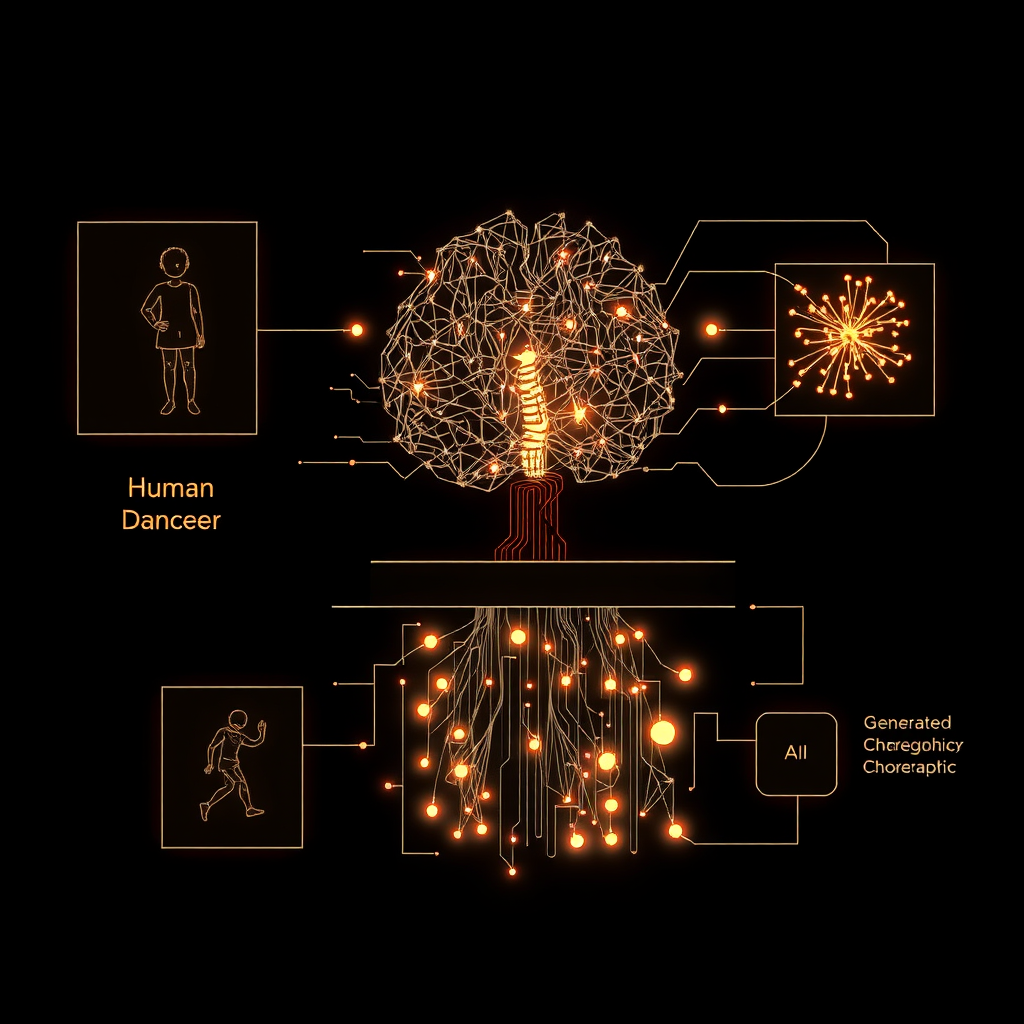
Neural Processing Pipeline
- Motion Input Analysis
- Pattern Recognition
- Creative Generation
- Output Synthesis
The Future of Embodied Intelligence
As we advance deeper into the realm of AI-driven choreography, we're witnessing the emergence of truly embodied intelligence—systems that don't just process movement data but understand the emotional and narrative context of human expression. These neural networks are learning to choreograph not just steps and gestures, but stories told through the language of the body.
The implications extend far beyond dance and performance. rehabilitation, sports training, and even virtual reality experiences are being transformed by AI systems that can generate and adapt movement patterns in real-time. The choreography of the mind is becoming a practical tool for enhancing human potential across multiple domains.
Looking ahead, the convergence of neural choreography with emerging technologies promises even more revolutionary developments. As AI systems become more sophisticated in their understanding of human movement, we approach a future where the boundary between human creativity and artificial intelligence becomes beautifully, mysteriously blurred—creating new forms of artistic expression that neither human nor machine could achieve alone.